9 slides, with what the presenter says. Highlighted words are cues: saying them makes something on the slide move.
-
1
Cover
Opens with a fade
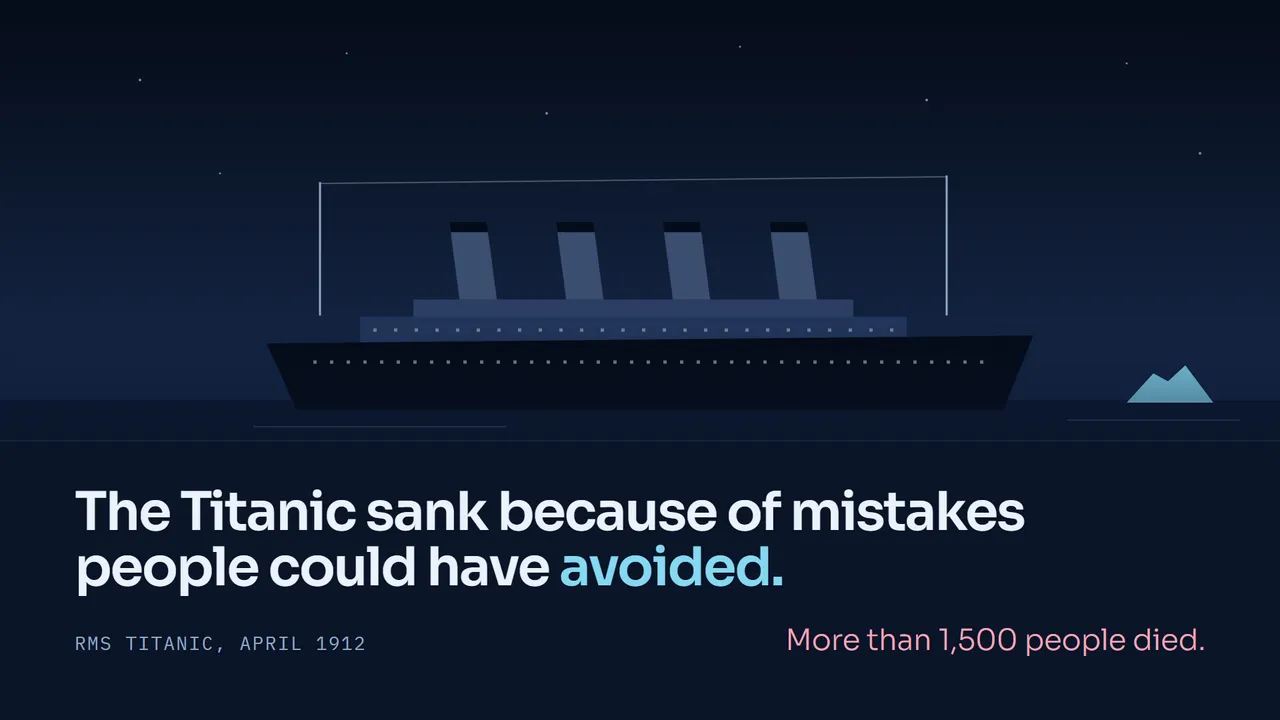
In April 1912 the Titanic left on its first voyage, and people called it practically unsinkable. Four days later it was at the bottom of the Atlantic, and more than 1,500 people were dead. Our argument today is simple. The Titanic did not sink because of one bad moment. It sank because of a chain of mistakes that people could have stopped.
-
2
The night
Enters with a wipe
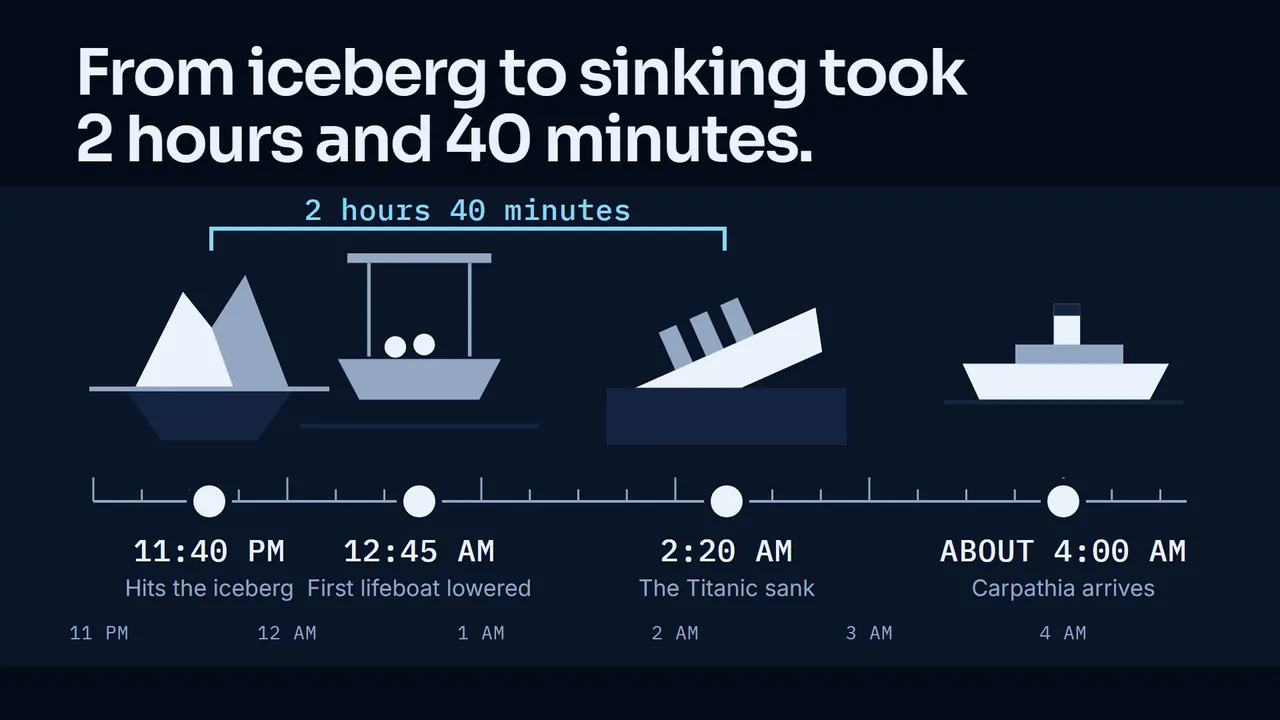
All of this happened in one night. At 11:40 pm on April 14, the Titanic hit the iceberg. About an hour later, around 12:45, the crew lowered the first lifeboat. At 2:20 in the morning, the ship sank. That is only 2 hours and 40 minutes. The rescue ship Carpathia did not get there until about 4 am.
-
3
Ignored warnings
Enters with a push
On April 14, other ships kept sending the Titanic ice warnings. There were at least six, from ships like the Caronia, the Baltic and the Californian. The Titanic did not slow down or change course. That night the Californian tried to warn them again. The radio operator, Jack Phillips, answered: shut up, I am busy. He was busy sending passengers' messages.
-
4
Too fast
Enters with a dissolve
After all those warnings, the Titanic did not slow down. It was going about 22 knots, which is close to its top speed. The night was calm with no moon, so there were no waves breaking at the bottom of the iceberg to help them see it. And the lookouts up in the crow's nest had no binoculars. When they finally saw the iceberg, there were only about 37 seconds before the ship hit it.
-
5
Why it sank
Enters with a slide over
People called the Titanic unsinkable because the hull was split into 16 watertight compartments. The ship could stay afloat with four of them full of water. But the iceberg scraped along the side and opened five. When the fifth one filled, the bow sank lower, and because the walls did not go all the way up, the water spilled over into the next one, and then the next.
-
6
Not enough seats
Enters with a wipe
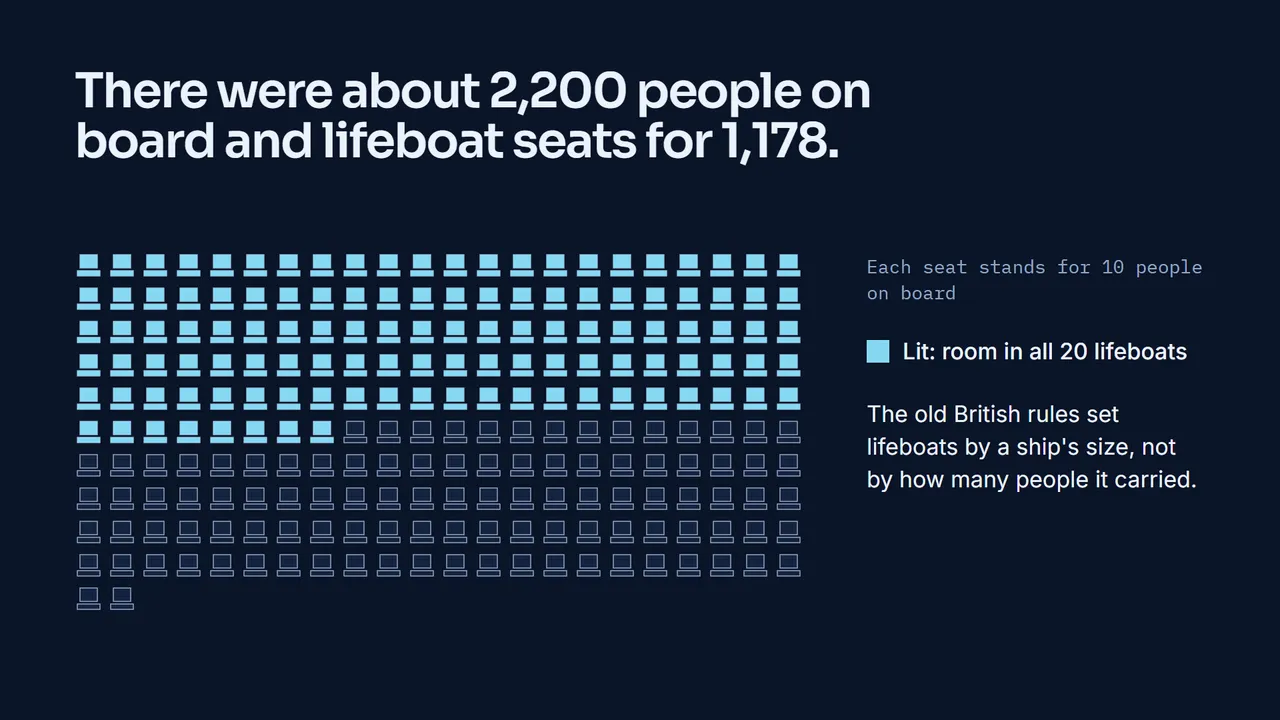
Here is everyone on the Titanic. Each little seat stands for 10 people, so this is about 2,200 people. Now watch how many lifeboat seats there were. Only these. That is 1,178 seats for everyone on the ship. And this was legal, because the old British rules counted lifeboats by how big the ship was, not by how many people were on it.
-
7
Half-empty boats
Enters with a split
It gets worse, because the boats they did have were not even full. The crew never had a full lifeboat drill, and lots of passengers did not believe the ship would really sink. So many of the first boats went down half empty. In the end only about 710 people survived, and more than 1,500 died.
-
8
What changed
Enters with a push
The good news is that the world learned from this. In 1914, countries signed the first Safety of Life at Sea agreement, and every ship had to carry a lifeboat seat for every person and run drills. Ships also had to keep the radio on all day and all night. And the International Ice Patrol started watching for icebergs in the North Atlantic, and it still does today.
-
9
The chain
Enters with a fade
So here is the whole story as one chain. The warnings were ignored, the ship went too fast, the lookouts had no binoculars, there were too few lifeboats, and the boats left half empty. Every one of these mistakes was avoidable. If just one link breaks, the chain falls apart and more people live. Thank you for listening.