Sales deck to a bank's CTO for Shieldwall, a tool that finds exposed secrets in code repositories. Pain: last year's leaks of API keys cost the average bank $1.2M. We found 41 live keys in a free trial scan of their public repos. 14 of the top 50 banks already use us. Pricing starts at $2,500 a month. Ask: a 30-day paid pilot.
Companies, people and numbers in the example briefs are made up, unless they’re public facts like history or science.
The look Cue chose
Exposure log
Near-black like a terminal at night, crisp grotesk type, and one amber glow for the keys that should never have been visible.
Type
Inter Tight and Inter
Colours
inkslateboneashambersignal
Motion
Unhurried and exact. Words rise from behind a mask one at a time on a long expo-out ease, 1 to 1.2s, staggered about 140ms. Rules and lines draw left to right with scaleX. Numbers count once and stop. Nothing loops except, at most, one slow blinking terminal caret. Nothing bounces.
Transitions
Fade or dissolve of 0.6s between quiet statement slides; a hard wipe left-to-right when evidence is revealed; a cut into the amber field for the price and the ask. Never zoom.
Slide by slide
9 slides, with what the presenter says. Highlighted words are cues: saying them makes something on the slide move.
1
Cover
Opens with a fade
Thank you for the time today. I want to start with what we found in your code. Your public repositories contain live keys right now. Everything I show you comes from your own code.
2
The cost
Enters with a push
Start with what a leak costs. Last year, leaked API keys cost the average bank one point two million dollars. That is one year, one bank, one kind of mistake. It is not a worst case. It is the middle of the range.
3
We looked
Enters with a wipe
So we did not want to guess about your bank. Before this meeting, we ran a free scan of your public repositories. Only code anyone on the internet can already read. Nothing private, nothing inside your network.
4
The finding
Enters with a zoom through
So what did the scan find? It found forty-one live keys. Not expired, not test keys. They are still live, sitting in your public code today.
5
What it does
Enters with a slide over
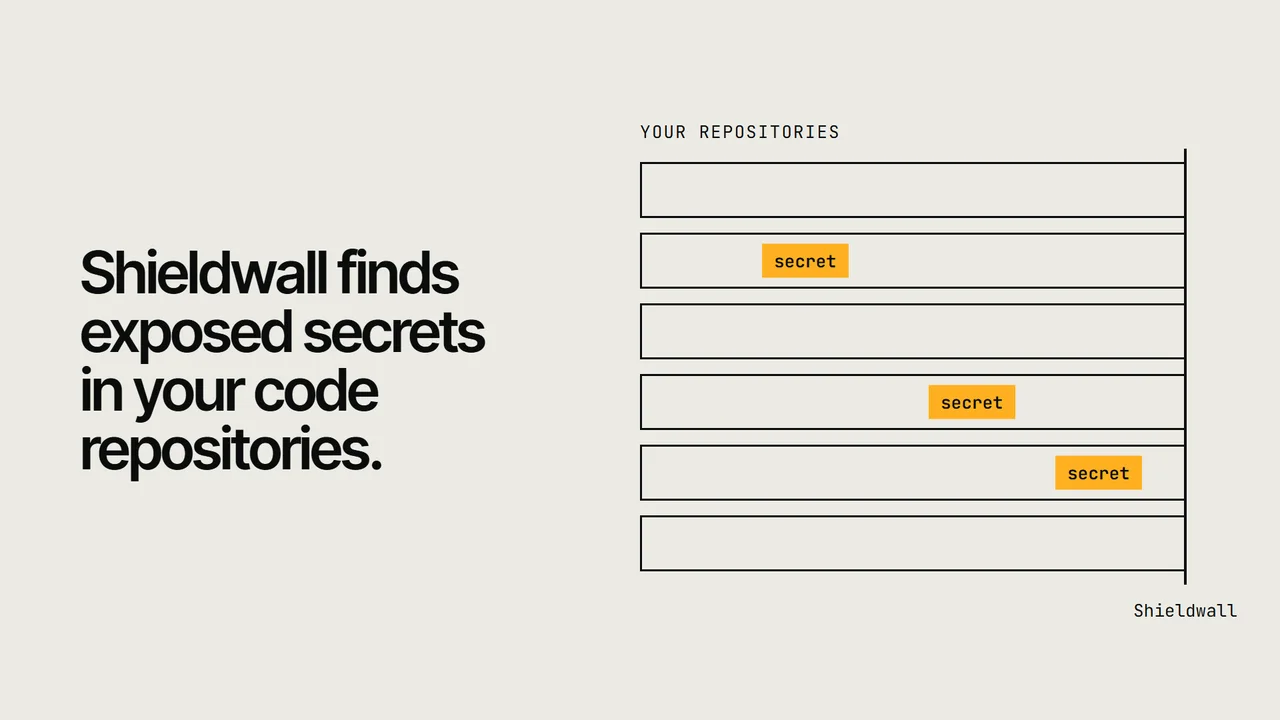
Shieldwall does one job, and does it well. It finds exposed secrets in your code repositories. That single job is how we found your keys.
6
Cost vs leak
Enters with a split
Now weigh it. The average leak costs a bank one point two million dollars. Shieldwall starts at two thousand five hundred dollars a month. That is thirty thousand a year, a fraction of one leak.
7
Other banks
Enters with a dissolve
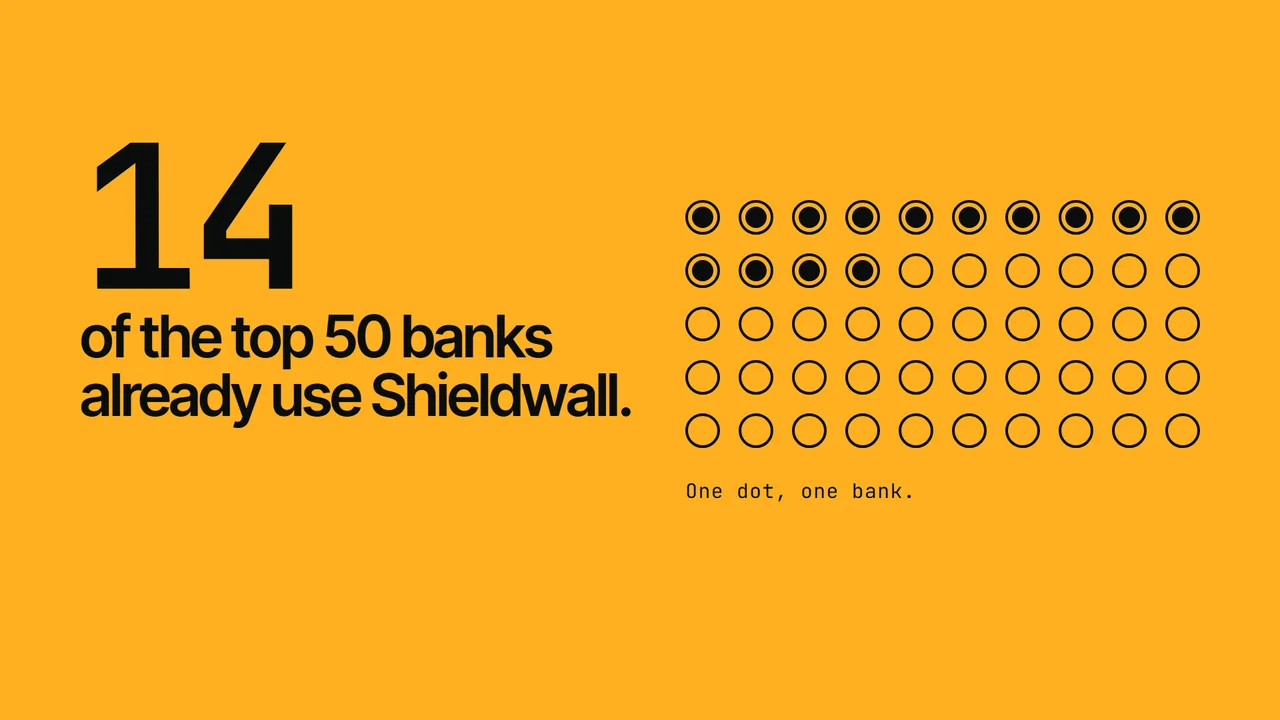
Banks are careful about who they let near their code. Fourteen of the top fifty banks already run Shieldwall. Each dot is one bank. They answer to the same regulators and ask the same questions you do.
8
The pilot
Enters with a blinds
The pilot is short, and it has an end. On day one we start from the forty-one keys already found. For thirty days Shieldwall watches every repository you point it at. On day thirty you see the full picture, and you decide.
9
The ask
Enters with a iris
So here is what I am asking. Start a thirty-day paid pilot. You already have forty-one live keys in public code. An average leak costs one point two million, and fourteen of the top fifty banks have made this call. Let's agree on a start date today.
Make one like it.
Tell Cue what you’re presenting and who’s listening, or give it an old deck. Early access is open: 100 free credits for everyone who joins before 30 November.