10 slides, with what the presenter says. Highlighted words are cues: saying them makes something on the slide move.
-
1
Welcome
Opens with a fade
Welcome, and thank you for coming. Today we will talk about scam calls and scam texts. We will look at five scams that happen a lot, how to spot them, and what to do. Anyone can learn this, and everyone in this room will.
-
2
Government caller
Enters with a push
Some callers say they are from the IRS, Social Security or Medicare. They say you owe money, or your benefits will stop, or you will be arrested. Real agencies do not call to threaten you. And they never ask you to pay with gift cards, a wire transfer or cryptocurrency. If a caller asks for that, it is a scam.
-
3
Tech support
Enters with a wipe
Sometimes a big warning pops up on your computer. It says you have a virus and gives you a number to call. If you call, they ask for remote access to your computer. Then they ask you to pay. Real companies never do this. Close it, and do not call the number.
-
4
Grandparent scam
Enters with a slide over
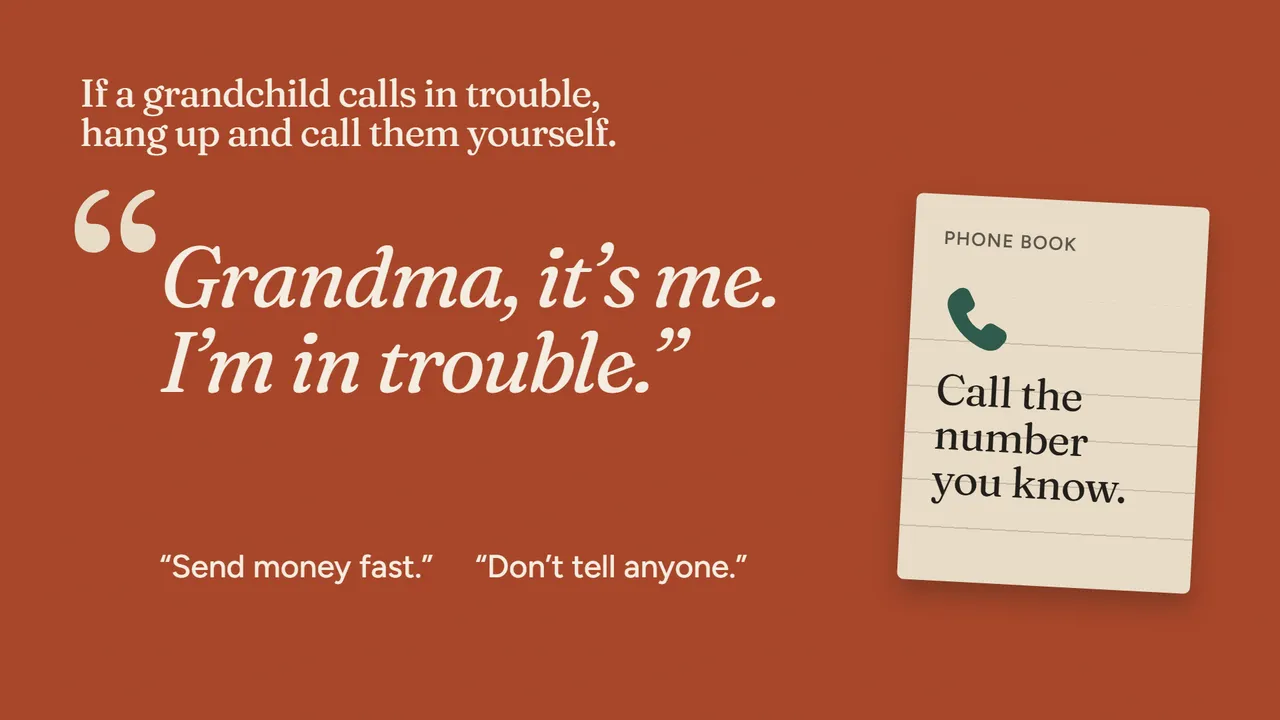
Sometimes a caller says, Grandma, it's me, I'm in trouble. They may say a grandchild is in jail, or in hospital, or stuck far away. Then they ask you to send money fast, and to keep it a secret. That is when you hang up. Then call your grandchild on the number you know.
-
5
Bank alert
Enters with a fade
Sometimes a call or a text says there is a problem with your bank account. Then it asks for your PIN, your password, or a one-time code. Your bank will never ask you for that. Do not send it. If you are worried, turn your card over and call the number on the back of your card.
-
6
Prizes and packages
Enters with a split
Some letters or calls say you won a prize. But first you must pay fees or taxes to collect it. A real prize never asks you to pay. Other texts say a package could not be delivered. Please do not click links in texts you did not expect.
-
7
Red flags
Enters with a zoom through
All five scams have the same warning signs. They tell you to hurry, and they make threats. They ask for gift cards, wire transfers, or your passwords and codes. They tell you to keep it secret, they call out of the blue, and they send links. And the caller id can be faked, so a name you know is not proof. If you see just one of these signs, it is fine to hang up.
-
8
What to do
Enters with a push
Here is what to do. First, hang up, even if they sound official. Second, never share a code, a password or a card number, and never send money you have not checked. Third, call back on a number you already trust, or talk to someone you trust. And if you already gave money or information, that happens to many people. Call your bank right away.
-
9
Who to call
Enters with a wipe
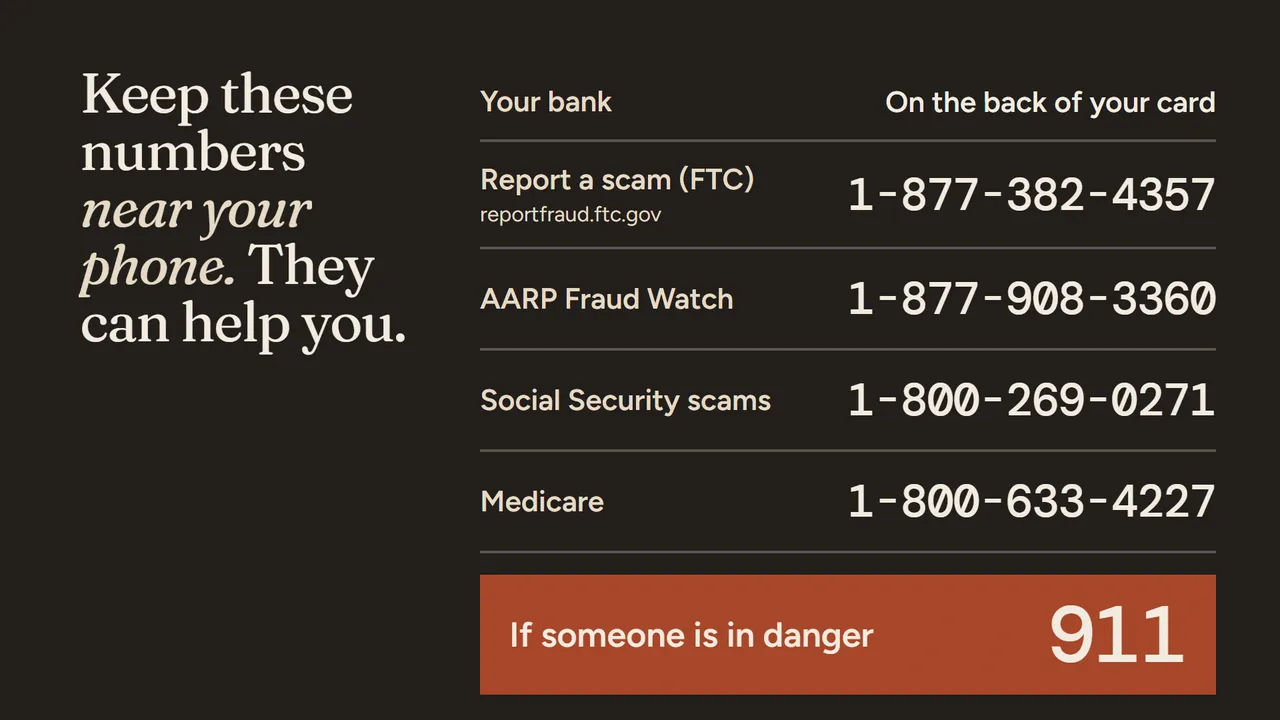
Keep these numbers near your phone. If a call worries you, call your bank on the number on the back of your card. You can report a scam to the FTC. The aarp helpline is free, and the people there are kind. If someone is in danger, call 911 right away.
-
10
Hanging up
Enters with a fade
If you remember one thing today, remember this. Hanging up is always safe. A real bank, or a real grandchild, will understand. You can just say, I will call you back. Then call a number you trust.