9 slides, with what the presenter says. Highlighted words are cues: saying them makes something on the slide move.
-
1
Cover
Opens with a fade
Some of you will rent your first place soon. Some of you want a car. Before they say yes, landlords and lenders look at one number. Today we're going to talk about that number and how to keep it strong.
-
2
What it is
Enters with a push
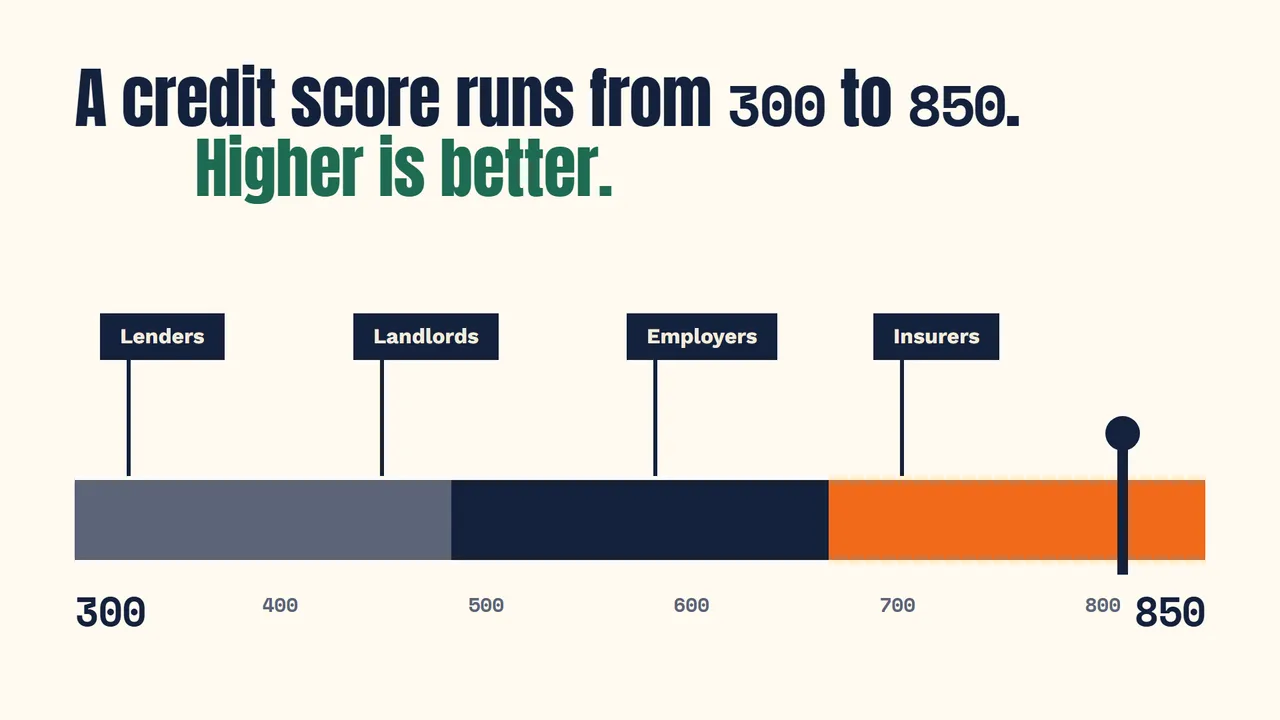
Your credit score is one number, from 300 to 850. It shows how well you pay back money you borrow. Higher is better, and a high score gets you better deals. Banks and landlords check it. Some employers and insurers may look at your credit too.
-
3
What builds it
Enters with a wipe
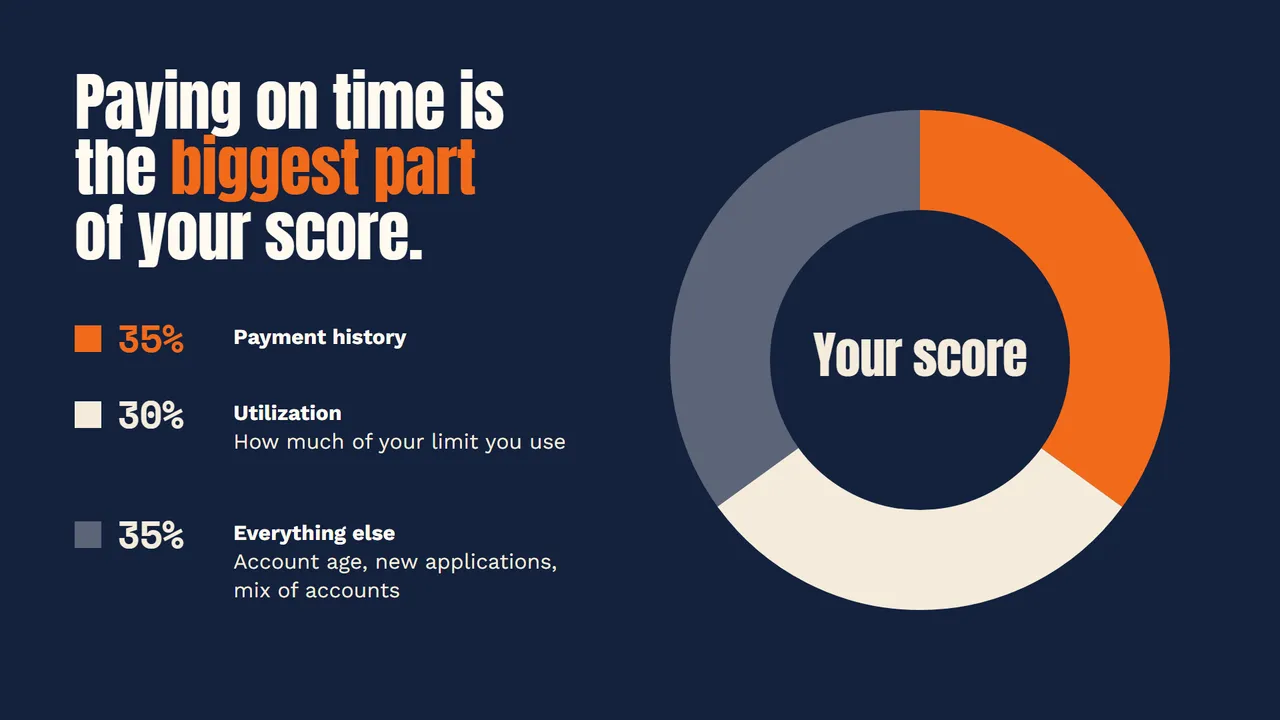
So what goes into your score? The biggest piece is your payment history. That is about 35 percent, and it just means paying on time. Next is how much of your limit you use, about 30 percent. The rest comes from how old your accounts are, new applications, and the mix of accounts you have.
-
4
One late payment
Enters with a iris
Here is how one slip can hang around. If you pay a bill thirty days late, the card company can report it. That mark can stay on your report for seven years. It is still there when you buy your first car, and still there when you rent your apartment.
-
5
Autopay fix
Enters with a slide over
So how do you never pay late? Turn on autopay for at least the minimum. The app pays for you, even when you forget. Even better, pick the full balance. Then you pay no interest on most purchases.
-
6
How APR works
Enters with a split
APR is the interest rate for a whole year. Say your card is twenty four percent. Split that over twelve months, and it is about two percent a month. So on a one thousand dollar balance, about twenty dollars gets added in the first month. That happens even if you buy nothing new.
-
7
Interest-only trap
Enters with a blinds
If you only pay the twenty dollars of interest, your balance stays at one thousand. Month after month, it does not move. After a year you've paid two hundred forty dollars and you still owe the same thousand. Every card sets its own minimum, so check your statement to see yours.
-
8
True cost
Enters with a zoom through
Now say you pay fifty dollars a month and stop using the card. It takes about 26 payments to pay it off. That's about two years and two months. You pay about twelve hundred ninety dollars in total. About two hundred ninety of that is interest, money you paid just for borrowing.
-
9
Before your card
Enters with a dissolve
So before you use a card, remember three things. Know your APR. Pay on time, every time. Pay in full when you can. You can check your own credit report for free at AnnualCreditReport dot com. Checking it yourself won't lower your score.