9 slides, with what the presenter says. Highlighted words are cues: saying them makes something on the slide move.
-
1
Cover
Opens with a fade
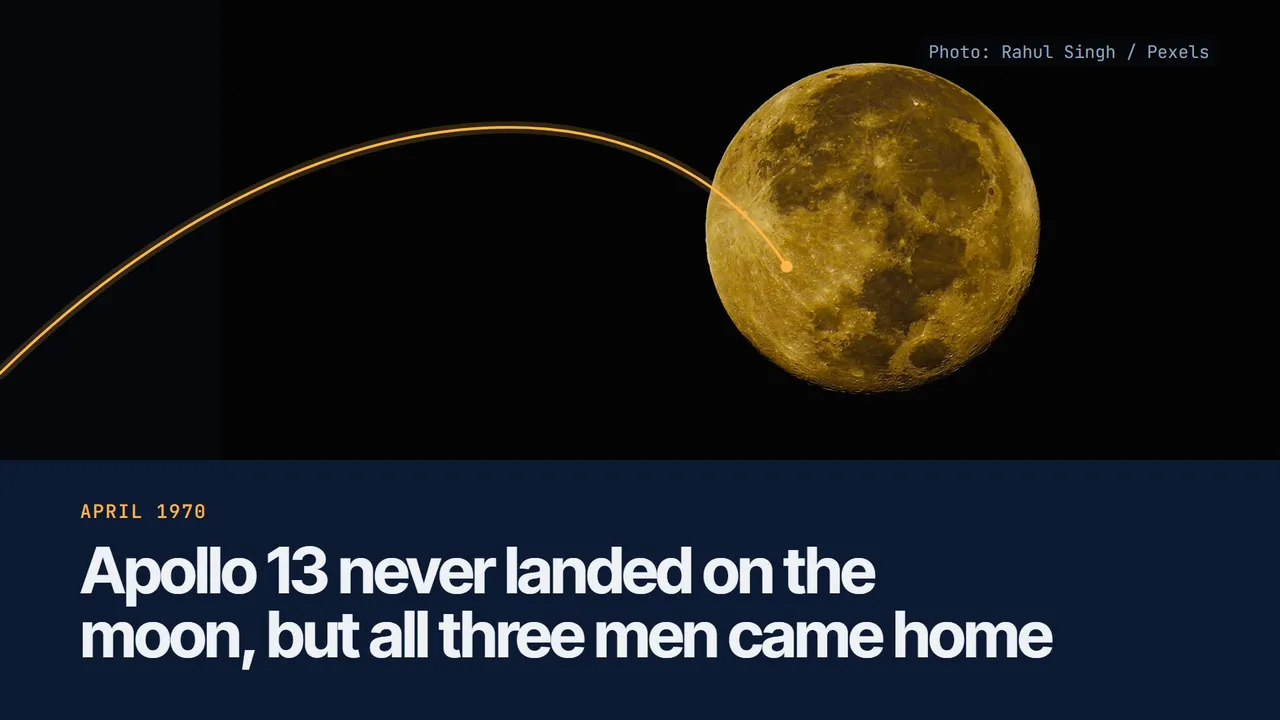
Most of you know how this one ends. Apollo 13 never landed on the moon, and all three men came home. Tonight I want to look at how that happened. It comes down to ordinary people solving problems, one at a time, under a lot of pressure.
-
2
Mission and crew
Enters with a push
Apollo 13 lifted off from Florida on April 11, 1970. Jim Lovell was the commander, with Jack Swigert and Fred Haise beside him. Two days later came the explosion. And on April 17 came the splashdown. Everything we'll talk about tonight happened inside those six days.
-
3
The explosion
Enters with a wipe
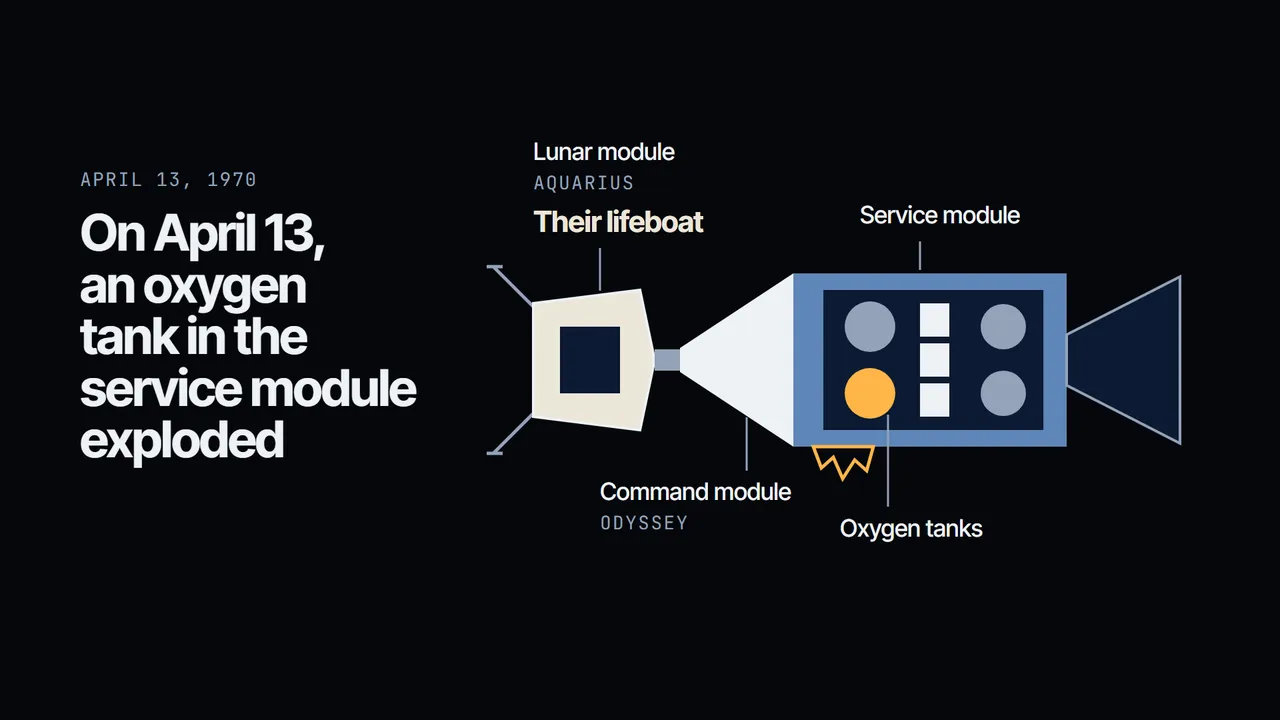
Two days out, on April 13, an oxygen tank in the service module blew apart. That module carried their oxygen, their water and most of their power. The command module could only run for a short time on its own batteries. So the three men moved into the lunar module, Aquarius, and used it as a lifeboat. The moon landing was over, and getting home became the whole job.
-
4
Rising carbon dioxide
Enters with a split
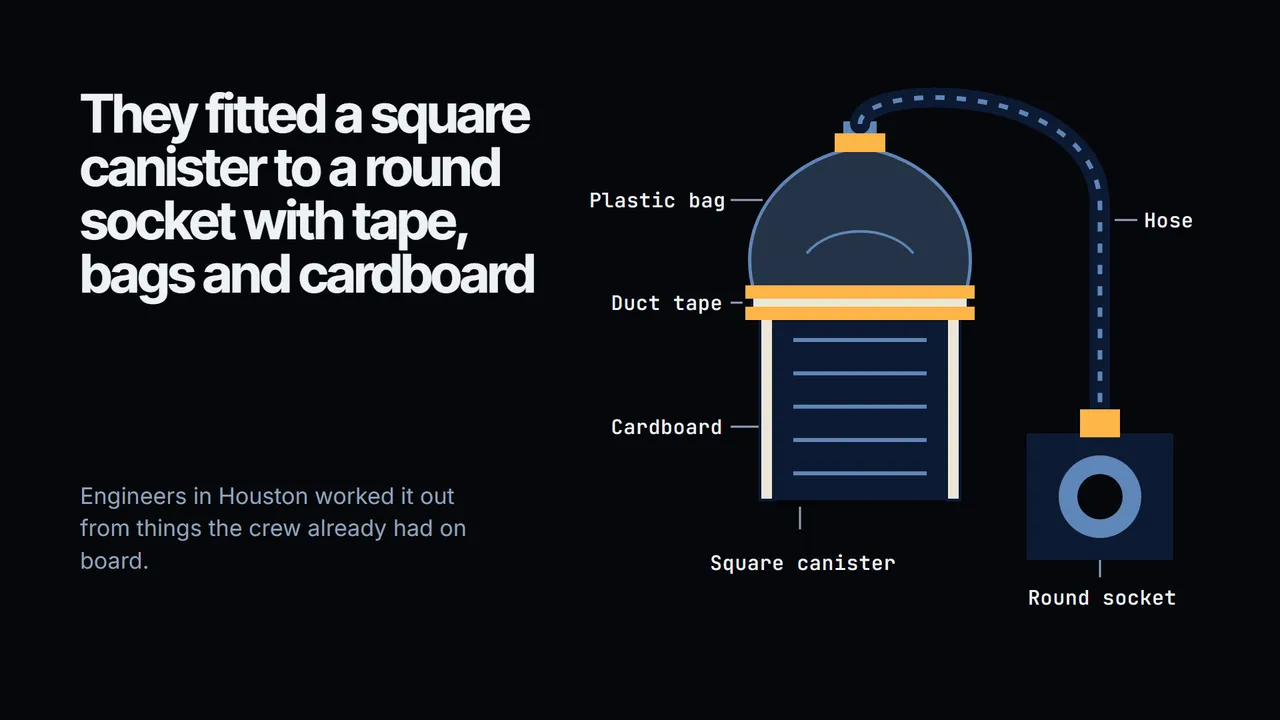
Moving into the lunar module kept them alive, but it caused a new problem. Every breath they let out added carbon dioxide to the cabin, and the lunar module's filters were only meant for two men for two days. There were spare filters in the command module, but those canisters were square, and the lunar module's sockets were round. The spares simply would not fit.
-
5
The duct tape fix
Enters with a slide over
So the people in Houston gathered everything the crew had on board and worked out a fix. They wrapped the square canister in a plastic bag and braced it with cardboard torn from the flight plan covers. Then they ran a hose from the bag to the round socket, so the air was pulled through the filter. Finally they sealed every joint with duct tape. It looked rough, but the carbon dioxide started to fall.
-
6
The cold ride
Enters with a dissolve
The filter fix solved the air, but the ride home was still miserable. To save the batteries for reentry, they turned off almost everything, heaters included. The cabin got colder each day, there was water on the walls, and they barely slept. For four days they were waiting, cold and tired, while the spacecraft swung around the moon and headed home.
-
7
Splashdown
Enters with a iris
After four cold days, the spacecraft came back through the atmosphere, and nobody knew for certain if the heat shield had survived. On April 17, the parachutes opened, and they splashed down in the South Pacific, near Samoa. All three men climbed out alive: Lovell, Swigert and Haise.
-
8
Teams under pressure
Enters with a push
So why did it work? Nobody fixed everything at once. The first problem was staying alive after the explosion, so they moved into the lunar module. Then the next one was the air, and they built the filter fix. The last was simply getting through days of cold until they came home.
-
9
Closing thought
Enters with a fade
If you take one thing home tonight, let it be this. Three lives were saved with tape, bags, cardboard and a lot of patient thinking, using what the crew had on board. Thank you for listening. I'd be glad to take any questions.